|
|
|
| |
Type
II diabetes and metabolic disorders
|
 |
|
|
| |
|
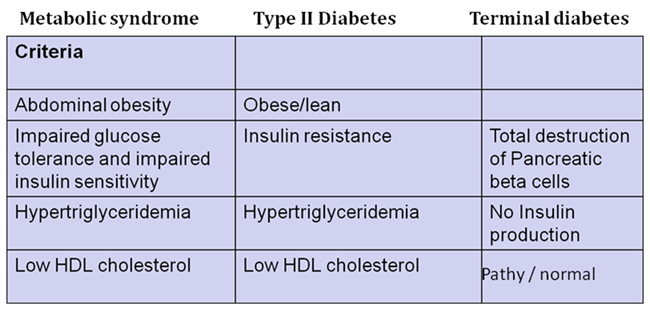
While
Type I diabetes is an autoimmune disease
which results into pancreatic beta cell
death and resultant lack of Insulin production,
Type II diabetes is scientifically most
challenging disease, which is characterized
by elevated insulin resistance and
glucose intolerance. Type II diabetes can
occur as a result of dysfunction in glucose,
lipid and energy homeostasis in any or all
of the following organs/organ systems including
liver, adipose, muscle, gastrointestinal
(GI) tract. Elevated levels of serum glucose
and free fatty acids occurring due to imbalances
in lipid and carbohydrate metabolism then
leads to endoplasmic reticular stress in
pancreatic beta cells, leading ultimately
to pancreatic beta cell death (terminal
diabetes). |
|
|
|
DIABETES RESEARCH AT CDRI FOCUSES ON DEVELOPING |
• |
Therapeutics |
• |
Knowledge-base
on diabetes/dyslipidemia and metabolic
syndrome through basic research. |
|
| |
|
|
THERAPEUTIC AIMS IN TYPE II DIABETES |
|
• |
Improving Insulin
sensitivity/ glucose tolerance |
|
• |
Reduction in serum glucose |
|
• |
Improvement of circulating lipid profile |
|
|
|
DRUG DESIGN AND SYNTHESIS |
• |
Anti-diabetic/dyslipidemic molecules
by target based drug designs and synthesis:
Targets:
GLP-1 analog
DPPIV inhibitor
|
• |
Natural product as a source of biologically
active
Anti-diabetic/dyslipidemic molecules
(marine/terrestrial). |
|
|
|
SCREENING AND DRUG DEVELOPMENT |
• |
In vitro
cell based screening.
-
Glucose-uptake assays in L6 Muscle
cells
-
3T3L-1 based assays on adipocyte
differentiation
-
Hepatocyte based screenings on
cholesterol and glucose metabolism
|
• |
In
vivo
screening
Diabetes:
§
Streptozotocin-induced diabetic mice
§
Sucrose loading model
§
db/db mice. Dyslipidemia: High fat
fed Syrian hamsters.
Dyslipidemia
§
High fat fed Syrian hamsters |
|
|
|
BASIC RESEARCH |
| 
|
• |
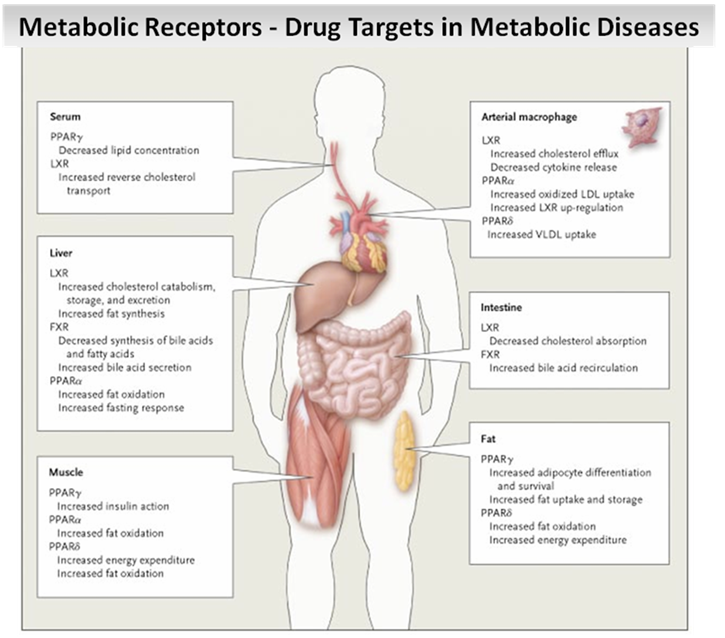
Studies
on functional regulation of carbohydrate
and lipid metabolism by metabolic
nuclear receptors. |
• |
Proteomic
analysis of 3T3L-1 cells treated with
adipogenic compounds |
• |
Studies on pancreatic ER stress. |
|
| |
| SIGNIFICANT ACHIEVEMENTS |
|
• |
CDR-134D123
(anti-hyperglycemic, Phase I): Natural
product |
• |
CDR134F194:
IND filed |
• |
Puffer
fish oil:
IND filed. |
• |
8
lead compounds identified with anti-hyperglycemic
and/oranti-dyslipidemic
activities |
• |
Development and optimization of proteomic
approaches for proteomic profiling
of lead compound treated
target tissues. |
• |
Development and optimization of screening
systems for metabolic nuclear receptors |
| |
Development of pancreatic islet cell
culture for ER stress studies |
|
| |
| |
| RECENT
PUBLICATIONS |
• |
Khan MP, Singh AK, Joharapurkar AA, Yadav M, Shree S, Kumar H, Gurjar A, Mishra JS, Chandra Tiwari M, Nagar GK, Kumar S, Ramachandran R, Sharan A, Jain MR, Trivedi AK, Maurya R, Godbole MM, Gayen JR, Sanyal S, Chattopadhyay N. (2015) Pathophysiological mechanism of bone loss in type 2 diabetes involves inverse regulation of osteoblast function by PPARγ coactivator-1α and skeletal muscle atrogenes: adiponectin receptor 1 as a potential target for reversing diabetes-induced osteopenia. Diabetes. 64(7):2609-23
|
• |
Singh AK, Joharapurkar AA, Khan MP, Mishra JS, Singh N, Yadav M, Hossain Z, Khan K, Kumar S, Dhanesha NA, Mishra DP, Maurya R, Sharma S, Jain MR, Trivedi AK, Godbole MM, Gayen JR, Chattopadhyay N, Sanyal S.(2014). Orally active osteoanabolic agent GTDF binds to adiponectin receptors, with a preference for AdipoR1, induces adiponectin-associated signaling, and improves metabolic health in a rodent model of diabetes. Diabetes. 63(10):3530-44.
|
• |
Bandyopadhyay GK, Lu M, Avolio E, Siddiqui JA, Gayen JR, Wollam J, Vu CU, Chi NW, O'Connor DT, Mahata SK. (2015) Pancreastatin-dependent inflammatory signaling mediates obesity-induced insulin resistance.Diabetes, 64(1):104-16.
|
• |
. Jaiswal N, Maurya CK, Arha D, Avisetti DR, Prathapan A, Raj PS, Raghu KG, Kalivendi SV, Tamrakar AK. (2015) Fructose induces mitochondrial dysfunction and triggers apoptosis in skeletal muscle cells by provoking oxidative stress. Apoptosis. 20(7):930-47.
|
• |
Verma S, Arha D, Tamrakar AK, Srivastava SK. (2015) Glycolipids: isolated from Oplismenusburmannii induce glucose uptake in L6-GLUT4myc myotube cells. Curr Top Med Chem. 15(11):1027-34.
|
• |
Korthikunta V, Pandey J, Singh R, Srivastava R, Srivastava AK, Tamrakar AK, Tadigoppula N. (2015) In vitro anti-hyperglycemic activity of 4-hydroxyisoleucine derivatives.Phytomedicine. 22(1):66-70.
|
• |
Rawat AK, Korthikunta V, Gautam S, Pal S, Tadigoppula N, Tamrakar AK, Srivastava AK. (2014) 4-Hydroxyisoleucine improves insulin resistance by promoting mitochondrial biogenesis and act through AMPK and Akt dependent pathway. Fitoterapia. 99:307-17.
|
• |
Jaiswal N, Gunaganti N, Maurya CK, Narender T, Tamrakar AK. (2015). Free fatty acid induced impairment of insulin signaling is prevented by the diastereomeric mixture of calophyllic acid and isocalophyllic acid in skeletal muscle cells. Eur J Pharmacol. 746:70-7.
|
• |
Riya MP, Antu KA, Pal S, Chandrakanth KC, Anilkumar KS, Tamrakar AK, Srivastava AK, Raghu KG. (2015). Antidiabetic property of Aervalanata (L.) Juss. exSchult. is mediated by inhibition of alpha glucosidase, protein glycation and stimulation of adipogenesis. J Diabetes. 7(4):548-61
|
• |
Antidiabetic property of Symplocoscochinchinensis is mediated by inhibition of alpha glucosidase and enhanced insulin sensitivity. (2014). Antu KA, Riya MP, Mishra A, Anilkumar KS, Chandrakanth CK, Tamrakar AK, Srivastava AK, Raghu KG. PLoS One. 2014 Sep 3;9(9):e105829.
|
• |
Sharma DK, Pandey J, Tamrakar AK, Mukherjee D. (2014). Synthesis of heteroaryl/aryl kojic acid conjugates as stimulators of glucose uptake by GLUT4 translocation. Eur J Med Chem.;85:727-36.
|
• |
Tamrakar AK, Maurya CK, Rai AK. (2014). PTP1B inhibitors for type 2 diabetes treatment: a patent review (2011 - 2014). Expert OpinTher Pat. 24(10):1101-15.
|
• |
Maurya CK, Singh R, Jaiswal N, Venkateswarlu K, Narender T, Tamrakar AK.(2014). 4-Hydroxyisoleucine ameliorates fatty acid-induced insulin resistance and inflammatory response in skeletal muscle cells. Mol Cell Endocrinol. 395(1-2):51-60.
|
• |
Khan MF, Maurya CK, Dev K, Arha D, Rai AK, Tamrakar AK, Maurya R. (2014). Design and synthesis of lupeol analogues and their glucose uptake stimulatory effect in L6 skeletal muscle cells. Bioorg Med ChemLett. 24(12):2674-9.
|
• |
Pandey J, Maurya R, Raykhera R, Srivastava MN, Yadav PP, Tamrakar AK. (2014). Murrayakoenigii (L.) Spreng. ameliorates insulin resistance in dexamethasone-treated mice by enhancing peripheral insulin sensitivity. J Sci Food Agric. 94(11):2282-8.
|
• |
Antihyperglycemic activity of phenylpropanoyl
esters of catechol glycoside and its
dimmers from Dodecadenia grandifloraManmeet
Kumar, Preeti Rawat, Neha Rahuja,
Arvind K.Srivastava, Rakesh MauryaPhytochemistry
(In press) |
• |
Synthesis of novel triterpenoid (Lupeol)
derivatives and their in-vivo antihyperglycemic
and antidyslipidemic activity.
K.Papi Reddy, AB Singh, A Puri, AK
Srivastava, T. Narender Bioorg.
Med. Chem. Letters (2009), 19(15):4463-6.
|
• |
Synthesis of α- amyrin derivatives
and their in vivo antihyperglycemic
activity T Narender, T Khaliq, AB
Singh, MD Joshi, P Mishra, JP Chaturvedi,
AK Srivastava, R Maurya, SC Agarwal.
European J. Med Chem. (2009), 44,
1215-1222 |
• |
Structure and activities of a steroidal
saponin from Chlorophytum nimonii
(Grah) Dalz.Lakshmi
V, Kumar
R, Pandey K, Joshi BS, Roy R, Madhusudanan
KP, Tiwari P, Srivastava AK.
Natural Products Research. (2009)
23(10):963-72 |
• |
Design and synthesis of 3, 5-diarylisoxazole
derivatives as novel class of anti-hyperglycemic
and lipid lowering agents.
Kumar A, Maurya RA, Sharma S, Ahmad
P, Singh AB, Tamrakar AK, Srivastava
AK.
Bioorg.
Med..Chem.(2009), 17(14): 5285-5292 |
• |
Synthetic studies in butenonyl C-glycosides:
Preparation of polyfunctional alkanonyl
glycosides and their enzyme inhibitory
activity.
Bisht SS, Fatima S, Tamrakar AK, Rahuja
N, Jaiswal N, Srivastava AK, Tripathi
RP.
Bioorg. Med. Chem. Letters (2009)
19 (10):2699-703 |
• |
5, 6-Diarylanthranilo-1,3-dinitriles
as a new class of antihyperglycemic
agents. Singh
FV, Parihar A, Chaurasia S, Singh
AB, Singh SP, Tamrakar AK, Srivastava
AK, Goel A Bioorg.
Med. Chem. Letters. (2009) 19(8):2158-61 |
• |
Synthesis of protein tyrosine phosphatase
1B inhibitors: model validation and
docking studies.
Saxena AK, Pandey G, Gupta S, Singh
AB, Srivastava AK.
Bioorg. Med. Chem. Letters. (2009)
19(8):2320-3 |
• |
db/+ Mice as an alternate model in
antidiabetic drug discovery research.
Tamrakar AK, Singh AB, Srivastava
AK.
Arch Med. Res., (2009) 40 (2):73-8
|
• |
Novel class of hybrid natural products
as antidiabetic agents. Raj K, Misra
N, Pachauri G, Sharma M, Tamrakar
AK, Singh AB, Srivastava AK, Phani
Kiran K, Narasimha Rao CV, Prabhu
SR. Natural Products Research (2009)
23(1):60-9 |
• |
Novel 2-aryl-naphtho[1,2-d]oxazole
derivatives as potential PTP-1B inhibitors
showing antihyperglycemic activities.
Kumar A, Ahmad P, Maurya RA, Singh
AB, Srivastava AK.
European J. Med. Chem. (2009) 44 (1):109-16 |
• |
Identification of pongamol and karanjin
as lead compounds with antihyperglycemic
activity from Pongamia pinnata
fruits. Tamrakar AK, Yadav PP, Tiwari
P, Maurya R, Srivastava AK.
J Ethnopharmacol. (2008) 118
(3):435-9 |
• |
Antihyperglycemic activity of
Sinularia firma and Sinularia
erecta in streptozotocin-induced
diabetic rats. Akhilesh K. Tamrakar,
Priti Tiwari, Rehan Ahmad, Rajesh
Kumar, Vijai Lakshmi, Mahendra Nath
Srivastava, Arvind K. Srivastava
Med. Chem. Res., (2008) 17:62-73 |
• |
.Synthesis of 3,5-disubsituted isoxazolines
as protein tyrosine phosphatase 1B
inhibitors.Rakesh Maurya, Prasoon
Gupta, Ghufran Ahmad, Dinesh Kumar
Yadav, Kailash Chand, Amar Bahadur
Singh, Akhilesh K. Tamrakar, Arvind
K. Srivastava
Med. Chem. Res. (2008) 17:123-136 |
• |
Synthesis and antihyperglycemic activity
of novel N-acyl-2-arylethylamines
and N-acyl-3-coumarylamines. Dwivedi
AP, Kumar S, Varshney V, Singh AB,
Srivastava AK, Sahu DP. Bioorg. Med.
Chem. Letters. (2008) 18(7):2301-5
|
|
|
|
|
| |
| |
|
|
| |
|
website
copyright © Central Drug Research Institute.
All rights reserved. earch Institute.
All rights reserved. earch Institute.
All rights reserved. earch Institute.
All rights reserved.
No part of this should be Downloaded or used
in any way other than the non-commercial purposes
without prior permission of the Director,
CDRI. |
|
|
|
|
|