|
| |
|
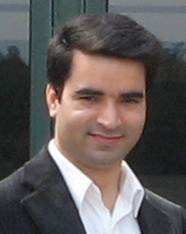
AAMIR NAZIR |
|
| |
|
Senior. Scientist
Toxicology Division
Central Drug Research Institute,
Lucknow-226 031 |
|
| |
| Educational Qualifications |
M.Sc., Ph.D. (Toxicology) |
| Phone |
+91-522-2772450 Ext. 4583 |
| E-Mail |
[email protected] |
|
| |
| POST
DOCTORAL RESEARCH EXPERIENCE |
| • |
Carried out research work at Medical College
of Georgia, USA. |
• |
Studied mechanism of anesthetic drug action
employing RNAi induced gene silencing in genetic model
system Caenorhabditis elegans. |
• |
Carried out Research work under “India Distinguished Visiting Fellowship” Program at University of Nottingham, UK; studies transgenic C. elegans models expressing dual fluorophores as model of human disease conditions. |
| |
| CURRENT
AREAS OF INTEREST |
| • |
Studies on functional genomics and epigenetic modulators of neurodegenerative diseases employing transgenic C. elegans model. Click
for his lab's details |
| |
| GROUP
MEMBERS |
| |
Ms. SupinderKaur, Senior Research Fellow (PhD student)
Mr. RizwanulHaque, Senior Research Fellow (PhD student)
Mr. Lalit Kumar, Senior Research Fellow (PhD student)
Mr. Shamsuzzama, Senior Research Fellow (PhD student)
Ms. Soobiya Fatima, ProjectJunior Research Fellow
Ms. TanviBaghel, ProjectJunior Research Fellow
Mr. Abhishek Singh, Project Trainee (NIPER, Raebareli)
Mr. Mahabir Prasad, Laboratory Assistant |
| |
|
|
| CURRENT
AREAS OF INTEREST /td>
|
| The laboratory of ‘Functional Genomics and Molecular Toxicology’ in the Division of
Toxicology of CSIR - Central Drug Research Institute, Lucknow is spearheaded by Dr. Aamir Nazir, Senior Scientist. The laboratory employs functional
genomics and epigenetics approaches towards understanding mechanistic aspects of age-associated neurodegenerative diseases.Model system C. elegans is
employed for the studies because of its immense genetic relevance; it exhibits appreciable homology of gene sequences with that of humans, is accessible
for carrying out genetic manipulations and presents with multiple disease pathways that are conserved across the taxa. The first ever genetic understanding
of Alzheimer’s disease came from research with C. elegans that led to identification of Presenilin-1 (orthologue of C. eleganssel-12). Similarly the process
of apoptosis was first studied in C. elegans and later became applicable to higher mammalian systems as well. C. elegans was the first multi-cellular
organism to have it genome mapped and the process of RNAi induced gene silencing was first discovered in this model. Work with C. elegans has resulted
in award of Nobel prize to six scientists for their pioneering work that has significantly aided in understanding of multiple biological processes
including understanding of various human disease conditions.We employ model system C. elegans for our studies and make use of genetic and
pharmacological interventions including RNAi induced gene silencing, transgene constructs (GFP/YFP), Transcriptome analysis, micro RNA expression
studies and associated aspects related to protein aggregation, cellular signaling and neuronal cell death, towards understanding mechanistic aspects
related to human Alzheimer’s and Parkinson’s disease.Our laboratory is equipped with state-of-the-art facilities including High end C. elegans
workstations with Stereozoom microscopes and imaging tools, C. elegans culture room equipped with customised sterile cabinets, Bacterial culture
facility with Class II Biosafety cabinet, Automated fluorescence microscope with imaging system, Genetic microinjection system for C. elegans, PCR,
Real time PCR, Multimode plate reader with Fluorescence/Luminescence/Absorbance suites, Electrophoresis/Blotting facility and all necessary
infrastructural setup required for carrying out cloning, expression and transgenesis related studies. We are also maintaining a repository of
90+ transgenic and knockout mutant strains of C. elegans and an RNAi library of ~17,000 bacterial clones required for silencing 85% of the genome
of C. elegans. The laboratory also has access to institutional Confocal microscopy, Multi-photon microscopy, NextGen sequencing (IluminaMiSeq),
Microarray, 2D DIGE and multiple other facilities that are required for addressing the specific aims of our studies. |
| |
|
|
| |
|
| |
| SELECTED
PUBLICATIONS |
| |
• |
1. SupinderKaur and Aamir Nazir* (2015) Potential role of protein stabilizers in amelioration of Parkinson’s disease and associated effects in transgenic Caenorhabditis elegans model expressing alpha-synuclein. RSC Advances 2015,5, 77706-77715. (Impact factor 3.84). |
• |
2. Nagarajan A, Bodhicharla R, Winter J, Anbalagan C, Morgan K, Searle M, Aamir Nazir, Adenle A, Fineberg A, Brady D, Vere K, Richens J, O'Shea P, Bell D, de-Pomerai D. (2015)A Fluorescence Resonance Energy Transfer Assay For Monitoring α-Synclein Aggregation In A Caenorhabditis elegans Model For Parkinson's Disease.CNS NeurolDisord Drug Targets. 2015 Aug 21. PMID: 26295817 (Impact factor 3.81).In collaboration with University of Nottingham, UK. |
• |
3. Shamsuzzama, Kumar L, Haque R, Aamir Nazir*. (2015).Role of MicroRNA Let-7 in Modulating Multifactorial Aspect of Neurodegenerative Diseases: an Overview.MolNeurobiol. 2015 Apr 1. PMID: 25823513. (Impact factor 5.28). |
• |
4. Goel A, Umar S, Nag P, Sharma A, Kumar L, Shamsuzzama, Hossain Z, Gayen JR, Aamir Nazir*. (2015).A dual colorimetric-ratiometric fluorescent probe NAP-3 for selective detection and imaging of endogenous labile iron(III) pools in C. elegans.ChemComm. (Camb). 2015 Mar 25;51(24):5001-4. doi: 10.1039/c4cc09798j. PMID: 25633904 (Impact factor 6.83). |
• |
5. Fatima S, Haque R, Jadiya P, Shamsuzzama, Kumar L, Aamir Nazir*. (2014).Ida-1, the Caenorhabditis elegans orthologue of mammalian diabetes autoantigen IA-2, potentially acts as a common modulator between Parkinson's disease and Diabetes: role of Daf-2/Daf-16 insulin like signalling pathway.PLoS One. 2014 Dec 3;9(12):e113986. doi: 10.1371/journal.pone.0113986. eCollection 2014. PMID:25469508. (Impact factor 3.53). |
• |
6. Haque R, Aamir Nazir*. (2014).SMAD Transcription Factor, Sma-9, Attunes TGF-β Signaling Cascade Towards Modulating Amyloid Beta Aggregation and Associated Outcome in Transgenic C. elegans.MolNeurobiol. 2014 Nov 19. [Epub ahead of print] PMID:25407930. (Impact factor 5.28). |
• |
7. Sashidhara KV, Modukuri RK, Jadiya P, Rao KB, Sharma T, Haque R, Singh DK, Banerjee D, Siddiqi MI, Aamir Nazir*. (2014). Discovery of 3-Arylcoumarin-tetracyclic Tacrine Hybrids as Multifunctional Agents against Parkinson's Disease.ACS Med ChemLett. 2014 Aug 20;5(10):1099-103. doi: 10.1021/ml500222g. eCollection 2014 Oct 9. PMID:25313319(Impact factor 3.12). |
• |
8. Sashidhara KV, Modukuri RK, Jadiya P, Dodda RP, Kumar M, Sridhar B, Kumar V, Haque R, Siddiqi MI, Aamir Nazir*. (2014).Benzofuran-chalcone hybrids as potential multifunctional agents against Alzheimer's disease: synthesis and in vivo studies with transgenic Caenorhabditis elegans.ChemMedChem. 2014 Dec;9(12):2671-84. doi: 10.1002/cmdc.201402291. PMID: 25251917 (Impact factor 3.04). |
• |
9. PoojaJadiya and Aamir Nazir*(2014)A pre- and co-knockdown of RNAseT enzyme, Eri-1, enhances the efficiency of RNAi induced gene silencing in Caenorhabditis elegans PLoS One 24;9(1):e87635. (PMID: 24475317) (Impact factor 3.53). |
• |
10. Goel A, Sharma A, Kathuria M, Bhattacharjee A, Verma A, Mishra PR, AamirNazir, Mitra K (2014) New fluoranthene FLUN-550 as a fluorescent probe for selective staining and quantification of intracellular lipid droplets. Org Lett.16(3):756-759. (PMID: 24410145) (Impact factor 6.36). |
• |
11. RizwanulHaque and Aamir Nazir*(2014)Insulin-degrading enzyme: a link between Alzheimer's and type 2 diabetes mellitus.CNS NeurolDisord Drug Targets; 13(2):259-264 (PMID: 24059320) (Impact factor 3.81). |
• |
12. PoojaJadiya and Aamir Nazir* (2013) Sirtuin mediated neuroprotection and its association with autophagy and apoptosis: Studies employing transgenic C. elegans model. Molecular Neurodegeneration 2013, 8(Suppl 1):65. (Impact factor 6.56). |
• |
13. SupinderKaur, Raj Sammi, PoojaJadiya and Aamir Nazir* (2012) RNAi of cat-2, a putative tyrosine hydroxylase, increases alpha synuclein aggregation and associated effects in transgenic C. elegans. CNS Neurol. Disorders - Drug Targets 11(4): 387-394. (PMID: 22483307). (Impact factor 3.81). |
• |
Pooja Jadiya and Aamir Nazir* (2012) Environmental toxicants as extrinsic epigenetic factors for Parkinsonism: Studies employing transgenic C. elegans model. CNS Neurol. Disorders – Drug Targets 11: 8, 976-983. (PMID: 23244436). (Impact factor 3.81). |
• |
Pooja Jadiya, Snober S. Mir and Aamir Nazir* (2012) Effect of various classes of pesticides on expression of stress genes in transgenic C. elegans model of Parkinson’s disease. CNS Neurol. Disorders – Drug Targets 11: 8, 1001-1005. (PMID: 23244415).(Impact factor 3.81). |
• |
Aamir Nazir* (2012) Model system Caenorhabditis elegans and Neurodegenerative disease research. CNS Neurol. Disorders – Drug Targets 11: 8, 955-956. (PMID: 23244420).(Impact factor 3.81). |
• |
Supinder Kaur, SR Sammi, Pooja Jadiya and Aamir Nazir* (2012) RNAi of cat-2, a putative tyrosine hydroxylase, increases alpha synuclein aggregation and associated effects in transgenic C. elegans. CNS Neurol. Disorders – Drug Targets 11:4, 387-394. (PMID: 22483307). |
• |
Rakesh Bodhicharla, Archana Nagarajan, Jody Winter, Ademola Adenle, Aamir Nazir, Declan Brady, Kelly Vere, Jo Richens, Paul O’Shea, David R. Bell and David de Pomerai*. (2012) Effects of alpha Synuclein Overexpression in Transgenic Caenorhabditis elegans Strains. CNS Neurol. Disorders – Drug Targets 11: 8, 965-975. (PMID: 23244416).(Impact factor 3.81). |
• |
Virendra Shukla, Suresh C. Phulara, Deepti Yadav, Sudeep Tiwari, Supinder Kaur, M.M. Gupta, Aamir Nazir and Rakesh Pandey* (2012) Iridoid Compound 10-O-trans-p-Coumaroylcatalpol Extends Longevity and Reduces Alpha Synuclein Aggregation in Caenorhabditis elegans. CNS Neurol. Disorders – Drug Targets 11: 8, 984-992 (PMID: 23244417).(Impact factor 3.81). |
• |
Pooja Jadiya, Manavi Chatterjee, Shreesh Raj Sammi, Supinder Kaur, Gautam Palit, Aamir Nazir (2011) Sir-2.1 modulates ‘calorie-restriction-mediated’ prevention of neurodegeneration in Caenorhabditis elegans: Implications for Parkinson’s disease. Biochem. Biophys. Res. Commun. (2011), 413(2), 306-310.(PMID: 21889494) |
• |
Pooja Jadiya, Asif Khan, Shreesh Raj Sammi, Supinder Kaur, Snober S. Mir, Aamir Nazir. (2011) Anti-Parkinsonian effects of Bacopa monnieri: Insights from transgenic and pharmacological Caenorhabditis elegans models of Parkinson’s disease. Biochem. Biophys. Res. Commun. 413(4), 605-610.(PMID: 21925152) |
• |
Aamir Nazir, Shreesh Raj Sammi, Pankaj Singh and Raj Kamal Tripathi (2010) Trans-cellular Introduction of HIV-1 Protein Nef Induces Pathogenic Response in Caenorhabditis elegans. PLoS ONEDec. 13; 5(12): e15312.(PMID: 21179446) |
• |
Shailendra S. Chaudhaery, Kuldeep K. Roy, Neeraj Shakya, Gunjan Saxena, Shreesh Raj Sammi, Aamir Nazir, Chandishwar Nath and Anil K. Saxena (2010) Novel Carbamates as Orally Active Acetylcholinesterase Inhibitors Found to Improve Scopolamine-Induced Cognition Impairment: Pharmacophore-Based Virtual Screening, Synthesis, and Pharmacology. J. Med. Chem. 53(17): 6490-6505.(PMID: 20684567). |
• |
Aamir Nazir (2008)Genes and Environment: The complex interplay. Journal of Environmental Biology, May 29(3) 2. (PMID: 18972676) |
• |
Aamir Nazir (2008) AIDS: Enlighten the un-lightened. Journal of Environmental Biology, Jan 29(1) 11. (PMID: 18831323) |
| • |
Aamir
Nazir, D. K. Saxena and D. Kar Chowdhuri
(2003) Induction of hsp70 in transgenic Drosophila:
Biomarker of exposure against phthalimide group of chemicals.
Biochim. Biophys. Acta. Vol. 1621(2):
218-225.(PMID: 12726998). |
• |
Aamir Nazir,
I. Mukhopadhyay, D. K. Saxena and D. Kar Chowdhuri (2003)
Evaluation of toxic potential of Captan: Induction of
hsp70 and tissue damage in transgenic Drosophila melanogaster
(hsp70-lacZ) Bg9 J. Biochem. Mol. Toxicol.
Vol. 17(2): 98-107.(PMID: 12717743). |
• |
Aamir Nazir, I. Mukhopadhyay,
D. K. Saxena and D. Kar Chowdhuri (2003) Evaluation of
No Observed Adverse Effect level (NOAEL) of solvent Dimethyl
Sulfoxide in Drosophila melanogaster. Toxicol. Mechanisms
and Methods. 13(2): 147-152.(PMID: 20021193). |
• |
I. Mukhopadhyay,
Aamir Nazir, D. K. Saxena and D. Kar Chowdhuri
(2003) Heat shock response: hsp70 in environmental
monitoring. J. Biochem. Mol. Toxicol.
Vol. 17(5): 249-254.(PMID: 14595846). |
• |
I. Mukhopadhyay, Aamir
Nazir, K. Mahmood, M. Das, D. K. Saxena, S. K.
Khanna and D. Kar Chowdhuri (2002) Toxicity
of argemone oil: Effect on hsp70 expression and tissue
damage in transgenic Drosophila melanogaster (hsp70-lacZ)
Bg9. Cell Biol. Toxicol. Vol. 18: 1-11. (PMID: 11991082) |
• |
I. Mukhopadhyay, Aamir
Nazir, D. K. Saxena and D. Kar Chowdhuri (2002) Toxicity
of Cypermethrin: hsp70 as a biomarker of response in transgenic
Drosophila. Biomarkers Vol. 7(6): 501-510.(PMID: 1258148) |
• |
Aamir Nazir,
I. Mukhopadhyay, D. K. Saxena and D. Kar Chowdhuri
(2001) Chlorpyrifos induced hsp70 expression
and effect on reproductive performance in transgenic Drosophila
melanogaster (hsp70-lacZ). Arch. Environ. Contam. Toxicol.
Vol. 41: 443-449.(PMID: 11598781) |
• |
D. Kar Chowdhuri, Aamir
Nazir and D. K. Saxena (2001)
Effect of three chlorinated pesticides on hsr-? stress
gene expression in transgenic Drosophila melanogaster.
J. Biochem. Mol. Toxicol. Vol. 15(4): 173-186. (PMID: 11673846) |
• |
S. K. Pal, Aamir
Nazir, I. Mukhopadhyay, D. K. Saxena and D. Kar
Chowdhuri (2001) Internet: A major resource
for toxicologists. Ind. J. Exp. Biol.
Vol. 39: 1207-1213.(PMID: 12018513) |
| |
| |
|
|
| |
|
| |
|