| |
| |
| |
| |
| |
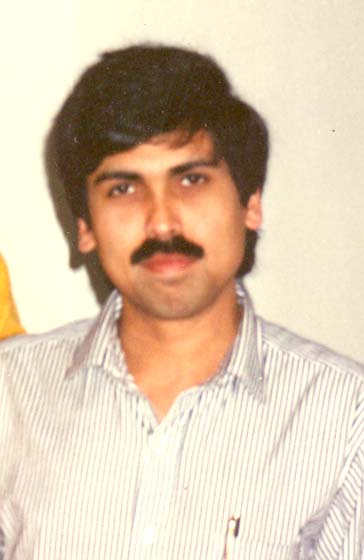
| DR.
KISHORE K SRIVASTAVA |
|
| |
 |
Senior Principal Scientist
Microbiology Division |
| |
| |
| POSITIONS |
| |
• |
JRF/SRF: CSIR-Central Drug Research Institute, Lucknow, INDIA 1981-1987 |
• |
Post Doctoral Fellow: University of Massachusetts Medical School, Worcester MA USA 1987-1990 |
• |
Research Associate : University of Massachusetts Medical School, Worcester MA USA 1990-1993 |
• |
Visiting Scientist and Assistant Professor : Robert Lurie Cancer Centre, Northwestern University Medical School, Chicago IL USA 2002-2004 |
• |
Scientist: CSIR-Central Drug Research Institute, Lucknow, INDIA 1994-Present |
|
| |
| CURRENT
AREAS OF INTEREST |
| |
|
Microbial Genetics, Target Identification, Post-translational modifications in Mycobacteria, Drug
Development |
|
| |
| OBJECTIVES |
| |
| • |
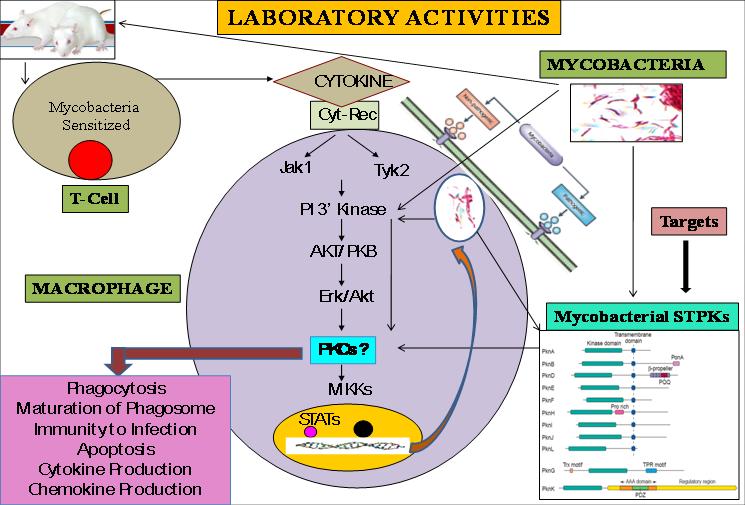
Signal transduction in Mycobacteria and its corollary in the host:
Adaptive responses and virulence determinants in pathogenic
organisms are recurrently controlled by signal transduction systems. Mycobacterium is an unusual pathogen which contains several
signal molecules. The signalling pathways in M. tuberculosis comprise of eleven eukaryotic like Serine/Threonine kinases (STPK);
eleven complete two component systems (TCS) in form of Histidine sensor kinases; a protein tyrosine kinase (TK) and two protein
tyrosine phosphatases (TP). The laboratory is involved in concerted effort to examine the role of all these signal molecules in the
physiology and virulence of M. tuberculosis. It is proposed that genetic and biochemical characterizations of these molecules and
the downstream determinants comprising their substrates will continue to serve in the understanding of the roles in combating the
disease. As a part of the Institute’s mandate, we believe that the exploration of the mechanism is likely to lead to the identification of
novel chemical entities which may abet in the successful control of this pathogen
|
|
| |
| ONGOING PROJECTS |
| |
| • |
Studies on the Virulence Factors of Mycobacteria in the Macrophage and in the Host |
| |
Characterization of the targets involved in the translational modifications of Mycobacteria |
| |
Identification of Substrates for Mycobacterial Protein Kinases and Tyrosine Phosphatases |
|
| |
|
| |
| RESEARCH GROUP |
| ALUMNI |
Present
Students> |
Project Fellows |
Shivendra K Chaurasiya, Assistant Professor, Sagar University
Ruma Grover, PDF SUNY, USA
Susmita K Singh PDF, Vardkasvagen, Sewden
Dr. Diwakar Singh, Assistant Professor, IGNTU |
Sameer Tiwari, SRF
Pramod K Singh, SRF
Richa Saxena, SRF
Aditi Chatterjee, JRF
Shivraj Yabaji, JRF
Swati Jaiswal, JRF
Alok Mishra, JRF
Sapna Pandey, PA
|
|
Prapunjika Sharma, Ph.D
Sapna Pande
|
| |
| PUBLICATIONS AND PATENTS |
| |
| Manuscripts |
> 50 |
| Patents |
3 |
| Review Articles |
2 |
| Editorial |
1 |
|
| |
| SELECTED
PUBLICATIONS |
LINK
http://www.ncbi.nlm.nih.gov/pubmed/?term=Kishore+Srivastava |
• |
Singh DK, Singh PK, Tiwari S, Singh SK, Kumari R, Tripathi DK, Srivastava KK. Phosphorylation of pyruvate kinase A by protein kinase J leads to the altered growth and differential rate of intracellular survival of mycobacteria. Appl Microbiol Biotechnol. 2014 Jun 17 |
• |
Kahlon AK, Negi AS, Kumari R, Srivastava KK et al. Identification of 1-chloro-2-formyl indenes and tetralenes as novel antistaphylococcal agents exhibiting sortase A inhibition. Appl Microbiol Biotechnol. 2013, DOI 10.1007/s00253-013-5036-1 |
• |
Singh SK, Kumari R, Singh DK, Tiwari S, Singh PK, Sharma S, Srivastava KK.. Putative roles of a proline-glutamic acid-rich protein (PE3) in intracellular survival and as a candidate for subunit vaccine against Mycobacterium tuberculosis. Med Microbiol Immunol. 2013 May 25. [Epub ahead of print] |
• |
Kumari R, Saxena R, Tiwari S, Tripathi D K and Srivastava KK. Rv3080c regulates the rate of inhibition of mycobacteria by isoniazid through FabD, Mol Cell Biochem. 2013; 374(1-2):149-155. |
• |
Singh SK, Tripathi DK, Singh PK, Sharma S, Srivastava KK. Protective and survival efficacies of Rv0160c protein in murine model of Mycobacterium tuberculosis. Appl Microbiol Biotechnol. 2013, 97 (13) 5825-5837 |
• |
Anand N, Singh P, Sharma A, Tiwari S, Singh V, Singh DK, Srivastava KK, et al. Synthesis and evaluation of small libraries of triazolylmethoxy chalcones, flavanones and 2-aminopyrimidines as inhibitors of mycobacterial FAS-II and PknG. Bioorg Med Chem. 2012; 20 (17):5150-63. |
• |
Kumari R, Singh SK, Singh DK, Singh PK, Chaurasiya SK, Srivastava KK. Functional characterization delineates that a Mycobacterium tuberculosis specific protein kinase (Rv3080c) is responsible for the growth, phagocytosis and intracellular survival of avirulent mycobacteria. Mol Cell Biochem. 2012, 369 (1-2):67-74. |
• |
Dinesh K. Tripathi, Kanchan Srivastava, Surya Kant, Srivastava KK, Molecular Profiling of Drug Resistant Isolates of Mycobacterium tuberculosis in North India. Advances in Microbiology, 2012, 2, 317-326 |
• |
Srivastava KK, Hepatitis: Delineating Genomic Approaches, R & D Highlights, 2009; 32 (4), 4-9 |
• |
Chaurasiya SK, Srivastava KK. Downregulation of protein kinase C-alpha enhances intracellular survival of Mycobacteria: Role of PknG; BMC Microbiol 2009. 24;9(1):271 |
• |
Singh M, Srivastava KK, Bhattacharya SM. Molecular cloning and characterization of a novel immunoreactive ATPase/RNA helicase in human filarial parasite Brugia malayi. Parasitol Res. 2009 104(4):753-61 |
• |
Chaurasiya SK and Srivastava KK - Differential regulation of proteins kinase C isoforms of macrophages by pathogenic and non-pathogenic mycobacteria Mol. Cell Biochem.2008, 318 , 167-74 |
• |
Singh AR, Joshi S, Arya R, Kayastha AM, Srivastava KK et al - Molecular cloning and characterization of Brugia malayi hexokinase Parasitol Int. 2008, 57, 354-61 |
• |
Rahbar R, Murooka TT, Hinek AA, Galligan CL, Sassano A, Yu C, Srivastava KK et al, Vaccinia virus activation of CCR5 invokes tyrosine phosphorylation signaling events that support virus replication. J Virology (USA) 2006, 80(14):7245-59 |
| • |
Parti RP, Srivastava S, Gachhui R, Srivastava KK, Srivastava R., Murine infection model for Mycobacterium fortuitum. Microbes Infect (Germany) 2005. 7(3):349-55 |
• |
Srivastava KK et al Engagement of protein kinase C-theta in interferon signaling in T-cells. J Biol Chem (USA).2004, 16; 279(29):29911-20 |
• |
Yi L, Srivastava KK, and Platanias LC: Mechanisms of interferon signaling in normal and malignant cells. Arch. Immunol. Ther. Exp. 2004, 52(3):156-63 |
• |
Pathak R, Pant CS, Shaw AK, Bhaduri AP, Gaikwad AN, Sinha S, Srivastava A, Srivastava KK, et al. Baylis-Hillman reaction: convenient ascending syntheses and biological evaluation of acyclic deoxy monosaccharides as potential antimycobacterial agents. Bioorg Med Chem. 2002 (10):3187-96. |
• |
Pathak R, Shaw AK, Bhaduri AP, Chandrasekhar KV, Srivastava A, Srivastava KK et al. Higher acyclic nitrogen containing deoxy sugar derivatives: a new lead in the generation of antimycobacterial chemotherapeutics. Bioorg Med Chem. 2002;10 (6):1695-702. |
• |
Deb DK, Dahiya P, Srivastava KK et al, Selective identification of new therapeutic targets of Mycobacterium tuberculosis by IVIAT approach. Tuberculosis (USA) 2002, 82:175-182 |
• |
Deb DK, Srivastava KK et al: Bioluminescent M. aurum expressing luciferase for rapid and high throughput screening of antimycobacterial drugs in vitro and in infected macrophages. BBRC (USA), 2000, 279:457-461 |
| • |
Srivastava KK et al: A recombinant cellulolytic Escherichia coli: Cloning of the cellulase gene and characterization of a bifunctional cellulase. Biotech. Letters, 1999, 21:293-297 |
| • |
Srivastava R, Deb DK, Srivastava KK et al: Green fluorescent protein as a reporter in rapid screening of antituberculosis compounds in vitro and in macrophages. BBRC (USA) 1998, 253:431-436 |
| • |
Srivastava R, Kumar GP, and Srivastava KK: Construction of a recombinant cellulolytic Escherichia coli. Gene 1995, 164:185-186, . |
| • |
Srivastava KK et al: Purifying nascent mRNA from nuclear run on assays using GITC. Bio-Techniques (USA) 1993, 15:226-227 |
| • |
Srivastava KK, et al : Molecular basis for heme dependent induction of heme oxygenase in primary cultures of chick embryo hepatocytes., demonstration of acquired refractoriness to heme. Euro. J. Biochem. 1993, 213:909-917 |
| • |
Larsson RF, Srivastava KK et al: Replication of patients isolates of HIV-1 in T cells: A spectrum of rates and efficiencies of entry. Proc. Nat. Acad. Sci, USA, 1992, 89:2223-2226 |
• |
Srivastava KK et al: HIV-1 NL4-3 replication in four T-cell lines: Rate and efficiency of entry a major determinant of permissiveness. J. Virology (USA) 1991, 65:3900-3902 |
| |
| |
|
|
| |
|
| |
|