|
| |
|
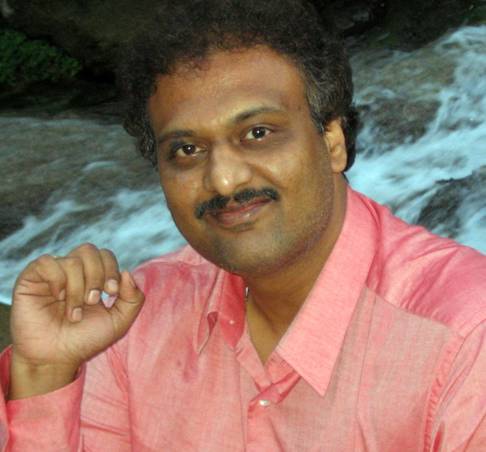
DR. RAVISHANKAR RAMACHANDRAN |
|
| |
|
|
 |
|
Senior Principal Scientist & In Charge
Prof. G.N. Ramachandran Structural Biology Lab
Molecular & Structural Biology Division
|
|
| |
| E Mail |
[email protected] |
| Phone |
+91-522-2772450 ext 4500/4441 |
| Fax |
+91-522-2771941 |
| MAJOR AWARDS |
• |
National Bioscience Award for Career Development, 2010, by the Department of Biotechnology, Ministry of Science & Technology, Govt. of India |
• |
NASI-SCOPUS Young Scientist Award, 2010, by the National Academy of Sciences, Allahabad, India & M/s Elsevier. |
| EDUCATION AND TRAINING |
• |
M.Sc (Physics), 1992, Sri Sathya Sai Institute of Higher Learning, Puttaparthi, India |
• |
Ph.D, 1999, Prof. M. Vijayan's lab, Molecular Biophysics Unit, Indian Institute of Science, Bangalore, India |
• |
Alexander von Humboldt Fellow, 2000-2002, Prof. Robert Huber's lab (Nobel Laureate), Max-Planck Institute for Biochemistry, Martinsreid, Germany |
| |
|
| |
| AREAS OF RESEARCH WORK |
| |
Dr. Ravishankar joined CSIR-CDRI at the end of 2002. His group elucidates molecular mechanisms underlying key pathways/proteins from human pathogens using a combination of X-ray crystallography, biochemical/biophysical studies, NMR, and rational structure-based computational analyses. The basic knowledge is exploited for the translational development of inhibitors with therapeutic potential collaboratively with geneticists, medicinal chemists, and others. Several proteins/components that have been characterised are recognised as new, validated and druggable targets. Consequently, inhibitors developed against these targets have new modes of action with potential to overcome several resistance issues. These are being explored under initiatives like the CSIR-Open Source Drug Discovery (OSDD), and other initiatives.
|
Detailed list of publications with citation statistics can be found at
http://scholar.google.com/citations?user=CNHV6coAAAAJ |
| |
| Some important research contributions from the group: |
| |
- DNA repair and recombination are essential processes of an organism. We have structurally and functionally characterized fundamentally important mycobacterial components from these processes like MtbLigA and Mtbβ-clamp. Further, we demonstrated that these proteins do not exhibit direct interactions in mycobacteria unlike in humans and even in bacteria like E. coli; instead, they interact through other factors. The results identify mechanistic differences in these fundamental processes in mycobacteria. The studies have also led to the identification of new classes of compounds that exhibit anti-bacterial specificity and distinguish the human enzyme several fold, both in vitro and in LigA deficient strains. The results have paved the way for the development of inhibitors with new mode(s) of action and have been actively taken up by the ‘Open source drug discovery’ project of CSIR and other programmes. PCT and Indian patents have also been filed.
|
| |
| |
|
|
|
|
| |
|
|
|
| |
|
|
|
| |
- Mycobacteria possess ESX/Type-VII secretion systems that export essential virulence factors like the ESAT-6 and CFP10. Very little is known about the molecular details and mechanisms of the components of these secretion systems. We have characterized proteins from this system, particularly EccA1 and its homologs without which the virulence factors are unable to be secreted. We demonstrated that EccA1 is a member of the earlier uncharacterized CbbX/Cfqx family of AAA-ATPases, and suggested how these thermostable ATPases can transfer energy to other components of the secretion system. In the translational context, ongoing work will lead to the identification of inhibitors with a new mode of action that does not allow the pathogen to secrete essential virulence factors.
|
|
| |
- Many global and local regulatory proteins are involved in controlling the changes to the lifestyle of M. tuberculosis. Feast/famine regulatory proteins are thought to be important for the switch from 'feasting' to 'famine' state and contain a small RAM (Regulator of Amino acid Metabolism) domain. The domain consist of about 80 amino acids, exhibit a ßaßßaß topology and are found in proteins with diverse functions. Proteins with this domain appear to be involved in amino acid regulation and interact with amino acids. Many aspects of their mechanism are unclear. How ACT/RAM domains can control the function of a variety of proteins? The way by which they translate a ligand-binding event to the protein-DNA binding site/active site of enzymes is largely unknown. Some proteins are inhibited by the ligand-binding event while others are activated. Our work on the mycobacterial Feast/famine regulatory proteins has identified that these proteins can adopt the rare ‘open’ quaternary structures in response to changes to the ligand binding site; eg. those that occur upon ligand binding. In these studies, the oligomeric symmetry that is normally strictly preserved, is disrupted to presumably enable the protein to bind to non-symmetric target DNA binding sites in response to ligand binding events, other than to symmetric regulatory sites. The studies also suggest how these proteins can form nucleosome-like particles like those observed through earlier electron-microscopy experiments and how ligand binding events could trigger specific regulatory outcomes by changing the oligomeric state of the protein and thereby enabling it to apparently bind to different target sites.
|
| |
|
|
|
|
| |
|
|
|
|
|
|
|
|
| Structure-function studies on factors like Lysine ε-aminotansferase (MtbLAT) and L-Alanine dehydrogenase (MtbALD) that are thought to be important for adaptation/maintenance of tuberculosis persistence/latency and ranked among the top-3 targets against tuberculosis persistence by the TB-Structural-Genomics Consortium [PLOS Comp. Biol. 2, 539-550, 2006], have thrown up novel results. They provide direct evidence that MtbLAT exhibits a glutamate ‘switch’ mechanism that enables the protein to carry out different reactions on similar substrates like L-Lys and L-Glu in the same active site. The enzyme selectively and elegantly uses the glu ‘switch’ to modify the ε-amino group of L-Lys and the α-amino group of L-Glu respectively in the forward and reverse reactions. The α-amino group of L-Lys is not modified in the reactions. The results were used to rationally identify the very first inhibitors of MtbLAT and a subsequent co-crystal structure showed that one of the inhibitors mimics the mode of substrate binding to the enzyme. Overall the latter work has identified a mechanism that is expectedly conserved in a sub-group of aminotransferases. |
| |
|
|
|
|
| |
- HIV-1 Nef is known to play a pivotal role in HIV pathogenesis and binds to different protein partners in lower and higher oligomeric states respectively. Our structural studies on HIV-1 Nef, a collaboration with Dr. R.K. Tripathi's lab, has led to interesting results. We demonstrated crystallographically that the protein forms higher order oligomers like tetramers with C4/ 4-fold symmetry. Normally a protein that exists as a dimer associates as a dimer-of-dimers, i.e with 222-symmetry, to form a tetramer. HIV-1 Nef has revealed the only known instance of a transition from a dimer to a tetramer with 4-fold symmetry. The functional implications of this unique transition are in an elegant mechanism where HIV-1 Nef in the dimeric state binds to a set of protein partners that are subsequently excluded from associating with the protein at higher oligomeric states due to the change in the subunit association. The binding site(s) that was available to partner proteins in the dimer are sterically inaccessible in the tetrameric state, where presumably Nef can interact with a different set of protein partners to result in varied functional consequences. The work has also been exploited through the rational identification of inhibitors with new mode of action that works by disrupting specific HIV-1 Nef –co-protein interactions [PCT and Indian patents filed].
|
| |
|
|
|
|
| |
- The apicoplast is an essential relict plastid in P. falciparum. Many of the original proteins of the apicoplast are now nuclear encoded. This means that over 500 potential NEAT (Nuclear Encoded Apicoplast Targeted) proteins have to interact with partners in the apicoplast and/or have to be transported to the plastid. Our studies on P. falciparum chaperones like Hsp70 that exhibit important interactions with NEAT proteins establishes methods for the analysis of potential substrate proteins with these chaperones using carefully designed peptides as probes and are important for designing inhibitors that disrupt essential interactions of NEAT proteins.
|
| |
- Sigma factors are an important family of regulatory proteins. Work on mycobacterial sigma factors and associated proteins like UsfX, SigF and RsfA demonstrates that novel properties of these mycobacterial factors can form a framework for new therapy development.
|
| |
| SELECTED RECENT PUBLICATIONS |
|
| • |
Srivastava SK, Tripathi RP, Ravishankar Ramachandran
NAD+ -dependent DNA ligase (rv3014c) from M. tuberculosis: Crystal structure of the adenylation domain and identification of novel inhibitors.
J. Biol. Chem. 280, 30273-30281, 2005 |
| • |
Srivastava SK, Dube D, Tewari N, Dwivedi, N, Tripathi RP & Ravishankar Ramachandran
Mycobacterium tuberculosis NAD+ -dependent DNA ligase is selectively inhibited by glycosylamines compared with human DNA ligase I.
Nucleic Acids Res. 33, 7090-7101, 2005 |
| • |
Tripathi, SM & Ravishankar Ramachandran
Direct evidence for a glutamate switch necessary for substrate recognition: Crystal structures of Lysine ε-aminotransferase (Rv3290c) from Mycobacterium tuberculosis H37Rv
J. Mol. Biol. 362, 877-886, 2006
(Suggests a common mechanism for a sub-class of aminotransferases) |
| • |
Tripti, S & Ravishankar Ramachandran
Mechanistic insights from the crystal structures of a feast/famine regulatory protein from Mycobacterium tuberculosis H37Rv
Nucleic Acids Res. 35, 7324-7335, 2007 |
• |
Tripathi SM & Ravishankar Ramachandran
Crystal structures of the Mycobacterium tuberculosis secretory antigen Alanine dehydrogenase (Rv2780) in apo and ternary complex forms captures ‘open’ and ‘closed’ enzyme conformations
PROTEINS72, 1089-1095, 2008 |
• |
Malik SS, Luthra A, Srivastava S & Ravishankar Ramachandran
The M. tuberculosis UsfX (Rv3287c) exhibits novel nucleotide binding and hydrolysis properties
Biochem. Biophys. Res. Comm. 375, 465-470, 2008 |
• |
Luthra A, Mahmood, A, Arora A & Ravishankar Ramachandran
Characterization of Rv3868: an essential hypothetical protein of the ESX-1 secretion system in M. tuberculosis
J. Biol. Chem., 283, 36532-36541, 2008 |
• |
Misra G, Aggarwal A, Dube D, Zaman MS, Singh Y & Ravishankar Ramachandran
Crystal structure of the Bacillus anthracis nucleoside diphosphate kinase and its characterization reveals an enzyme adapted to perform under stress conditions
PROTEINS, 76, 496-506, 2009 |
• |
Jyoti Pandey, Anindra Sharma, Vinod K. Tiwari, Divya Dube, Ravishankar Ramachandran, Vinita Chaturvedi, Sudhir K. Sinha, Nripendra N. Mishra, Praveen K. Shukla, Rama P. Tripathi
Solution phase synthesis of a library of carbapeptide analogues based on glycosylamino acid scaffolds, their in silico screening and antimicrobial evaluation
J. Comb. Chem., 11, 422-427, 2009 |
• |
Tripti Shrivastava, Abhishek Dey & Ravishankar Ramachandran
Ligand induced structural transitions, mutational analysis and ‘open’ quaternary structure of the M. tuberculosis Feast/famine regulatory protein (Rv3291c)
J. Mol. Biol. 392, 1007-1019, 2009 |
• |
Gauri Misra & Ravishankar Ramachandran
Exploring the positional importance of aromatic residues and lysine in the interactions of peptides with the Plasmodium falciparum Hsp70-1
Biochim. Biophys. Acta. 1804, 2146-2152, 2010 |
• |
Tripathi RP, Pandey J, Kukshal V, Ajay A, Mishra M, Dube D, Chopra D, Dwivedi D, Chaturvedi V & Ravishankar Ramachandran
Synthesis, in silico screening and bioevaluation of dispiro-cycloalkanones as antitubercular and mycobacterial NAD+-dependent DNA ligase inhibitors
Med. Chem. Commun. 2, 371 – 377, 2011 |
• |
Pankaj Singh, Gaya Prasad Yadav, Sudeepti Gupta, Anil Kumar Tripathi,
Ravishankar Ramachandran* & Raj Kamal Tripathi*
A novel dimer-tetramer transition captured by the crystal structure of HIV-1 Nef
(*Joint corresponding authors)
PLoS ONE6(11): e26629. doi:10.1371/journal.pone.0026629, 2011 |
• |
Vandna Kukshal, Mridul Mishra, Arya ajay, Taran Khanam, Rahul Sharma, Divya Dube, Deepti Chopra, Rama Pati Tripathi & Ravishankar Ramachandran
Synthesis and bioevaluation of aryl hydroxamates distinguishing between NAD+ and ATP-dependent DNA ligases. Med. Chem. Commun. 3, 453-461, 2012
(Was specially cited in ‘Chemistry World’) |
• |
Vandna Kukshal, Taran Khanam, Deepti Chopra, Nidhi Singh, Sabyasachi Sanyal & Ravishankar Ramachandran
M. tuberculosis sliding β-Clamp does not interact directly with the NAD+ -dependent DNA ligase
PLoS ONE. 7(4): e35702. doi:10.1371/journal.pone.0035702, 2012 |
• |
Macwan AS, Kukshal V, Srivastava N, Javed S, Kumar A & Ravishankar Ramachandran
Crystal structure of the Hexachlorocyclohexane dehydrochlorinase (LinA-type2): mutational analysis, thermostability & enantioselectivity
PLoS ONE 7(11):e50373 doi: 10.1371/journal.pone.0050373, 2012 |
• |
Luthra A, Gaur A & Ravishankar Ramachandran
Rv3868 (EccA1), an essential component of the M. tuberculosis ESX-1 secretion system, is thermostable
Biochim. Biophys. Acta 1834, 1181-1186, 2013 |
| |
| PRESENT LAB MEMBERS |
• |
1. Abhishek Dey -SRF
2. Taran Khanam -SRF
3. Amit Gaur -SRF
4. Aparna Agrawal -SRF
5. Sonal Shree -SRF
6. Kiran Lata -JRF
7. Anubhooti -JRF
8. Niyati Rai -PA-II
9. Ankita Shukla -PA-II
10. Jyoti Bala Kaushal - PA-II |
| ALUMNI |
• |
1. Dr. Sandeep Kumar Srivastava, Ph.D, Asst. Prof., DRDO Research University, Pune
2. Dr. Sarvind Mani Tripathi, Ph.D, Univ. of California
3. Dr. Tripti Shrivastava, Ph.D, Scientist, THSTI, Gurgaon
4. Dr. Amit Luthra, Ph.D, The Univ. of Connecticut Health Center
5. Dr. Shuja Shafi Malik, Ph.D, Univ. of Kansas
6. Dr. Gauri Misra, Ph.D, Asst. Prof., Amity University, Noida
7. Dr. Gaya Prasad Yadav, Ph.D, UT Southwestern Med Center
8. Dr. Divya Dube, Ph.D, AIIMS, New Delhi
9. Dr. Vandna Kukshal, Ph.D, Washington Univ., St Louis
10. Deepti Chopra, PA-II,
11. Anamika Jain, PA-II,
12. Ramesh Kumar, PA-II,
13. Ruchi Maurya, PA-II,
14. Mahesh Deori, PA-II,
15. Sonia Mittal, PA-II, |
|
• |
|
| |
| |
|
|
| |
|
| |
|